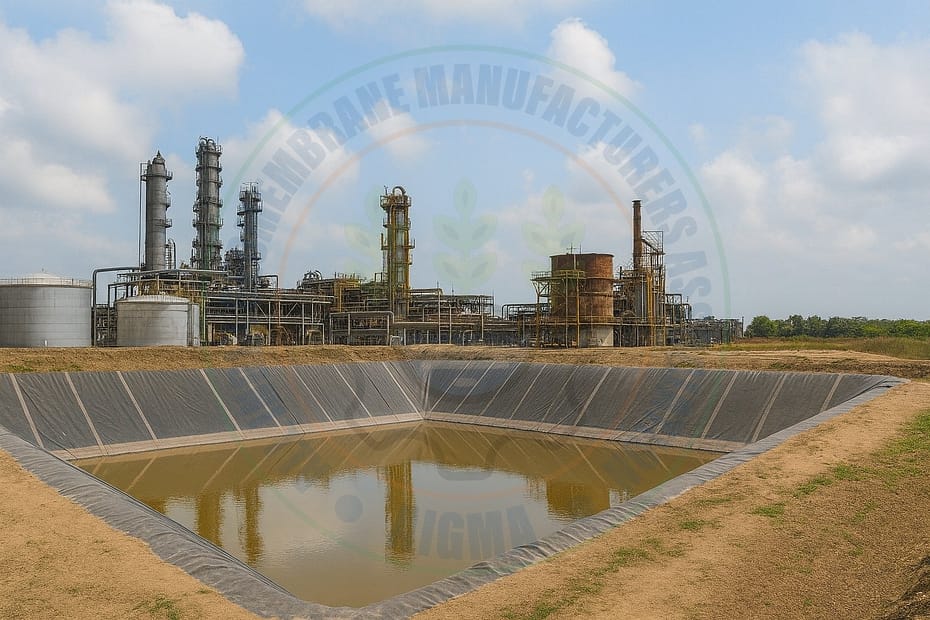
In industrial operations, from manufacturing to mining, managing waste and preventing environmental contamination is not just a regulatory requirement, but a critical responsibility. As industries grow, so does the volume of hazardous and non-hazardous waste generated. Geomembranes, especially HDPE liners, have become the go-to solution for safe, long-term containment of industrial waste.
🔍 Why Geomembranes Are Used for Waste Containment
Industrial waste often contains chemicals, heavy metals, oils, and other pollutants that can severely damage soil, air, and water quality if not contained properly. Traditional containment methods like compacted soil or clay liners may not offer adequate resistance to chemical attack or long-term degradation.
Geomembranes offer key advantages:
- High chemical resistance to industrial leachates and effluents
- Excellent impermeability, preventing seepage into surrounding soil and groundwater
- Long service life, even in harsh and corrosive environments
- Ease of installation and compatibility with other barrier systems
🧪 Applications in Industrial Settings
Common areas where geomembranes are used for waste containment include:
- Hazardous waste landfills
- Evaporation ponds for chemical process waste
- Oil and gas containment systems
- Mining tailing ponds and heap leach pads
- Wastewater treatment plant liners
These applications demand materials that can withstand thermal stress, UV exposure, mechanical pressure, and constant chemical interaction—criteria that high-quality HDPE geomembranes meet effectively.
✅ Best Practices for Geomembrane Waste Containment
To ensure reliable performance and compliance, industries must follow best practices during design, installation, and maintenance:
- Use Certified and Tested Materials
Always choose BIS-compliant or internationally certified geomembranes, backed by technical data sheets and third-party test reports. - Proper Subgrade Preparation
A well-compacted and leveled subgrade prevents punctures and ensures uniform liner support. - Seam Welding by Trained Technicians
Welding seams using extrusion or hot wedge methods requires expertise and quality control testing (e.g., air pressure or vacuum box tests). - Leak Detection and Monitoring
Incorporate leak detection layers or double-lining systems for high-risk sites, and monitor for any seepage over time. - Routine Inspection & Maintenance
Schedule regular site inspections, especially after major weather events or chemical spills, and repair any damage promptly.
⚖️ Regulatory Compliance
Industries must comply with state and national pollution control board guidelines, which often mandate the use of impermeable liners in waste containment. Geomembranes help meet these requirements by offering traceable, documented, and auditable quality standards—reducing liability and risk of environmental fines.
🌍 Toward Safer and Greener Industry
Beyond compliance, using geomembranes reflects a commitment to environmental stewardship. By safely isolating hazardous waste and preventing groundwater contamination, industries can reduce their ecological footprint and contribute to cleaner, more responsible operations.
📌 Conclusion
Industrial waste containment is too critical to rely on outdated methods. With proven durability, chemical resistance, and regulatory alignment, geomembranes represent best-in-class protection for industrial sites. Following best practices ensures not only performance but long-term environmental and operational peace of mind.