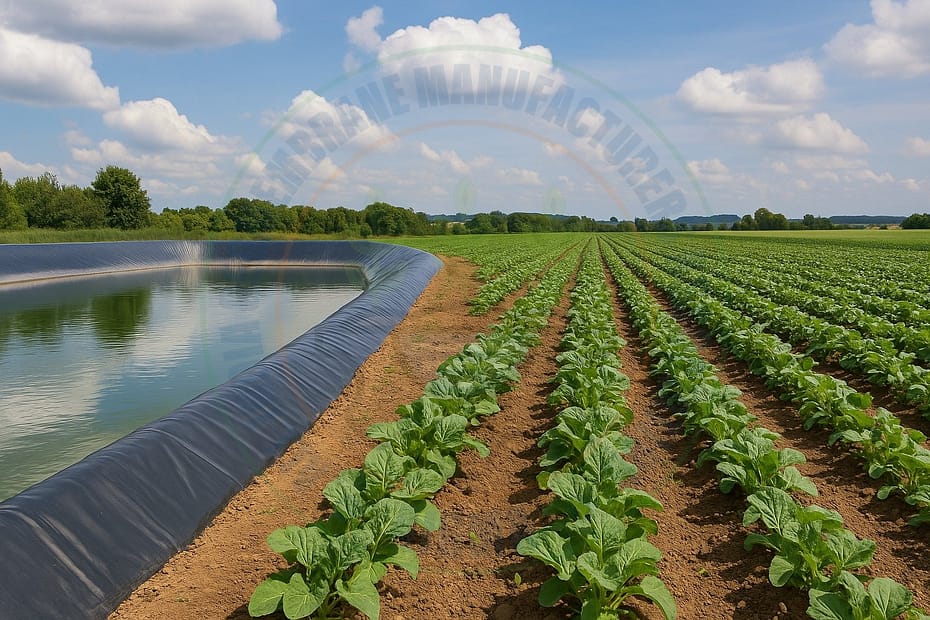
Water is one of the most critical resources in agriculture—and also one of the most wasted. In regions where rainfall is irregular and groundwater is depleting, efficient water management has become essential for sustainable farming. This is where geomembranes play a transformative role.
💧 The Problem: Water Loss in Traditional Systems
Traditional water storage methods—like unlined ponds, canals, or earthen tanks—often suffer from high seepage rates. In many cases, up to 40–50% of stored water can be lost through the soil before it reaches the crop. This not only reduces irrigation efficiency but also limits the ability of farmers to grow multiple crops throughout the year.
✅ The Solution: Geomembrane-Lined Ponds and Canals
Geomembranes are impermeable polymer sheets (commonly HDPE) used to line farm ponds, water tanks, and irrigation canals. By creating a secure barrier between water and soil, they eliminate seepage, reduce evaporation, and allow farmers to store water for longer periods. This stored water becomes a dependable source for irrigation during dry spells or low rainfall seasons.
🌱 The Impact on Crop Yields
With assured water availability, farmers can:
- Grow additional crop cycles beyond the monsoon season
- Switch to higher-value crops that require consistent irrigation
- Avoid crop loss during periods of drought or water shortage
- Reduce dependency on costly groundwater pumping
Studies have shown that lined ponds can increase water retention by over 90%, directly improving irrigation reliabilityand overall farm productivity.
💡 Beyond Water Storage
Geomembranes are also used in protected cultivation systems—like polyhouses and hydroponics—to manage moisture levels and reduce weed growth. This further contributes to healthier crops and higher yields with less water input.
🛡️ Durable and Cost-Effective
Though the initial investment in geomembranes may be higher than traditional materials, they offer a long life (often 5–10+ years) with minimal maintenance. Many state governments in India also provide subsidies for geomembrane-lined farm ponds, making them affordable for small and marginal farmers.
🌾 Conclusion
Geomembranes are more than just liners—they are tools for agricultural resilience. By helping farmers save water, reduce input costs, and increase productivity, they support sustainable growth in Indian agriculture. As awareness and access improve, geomembranes will continue to play a central role in the future of water-smart farming.