Geomembranes have long served as a trusted barrier system in agriculture and waste containment—but today, their role is expanding rapidly. From smart irrigation and climate-resilient farming to green infrastructure and industrial risk management, geomembranes are at the forefront of innovation across multiple sectors. Advancements in materials, sustainability goals, and regulatory frameworks are all driving new trends in how geomembranes are applied and engineered.
🌾 Agriculture: Precision and Protection
The use of geomembranes in agriculture is moving beyond simple pond lining. With water stress intensifying, farmers are adopting geomembranes for lined canals, raised grow beds, hydroponics, and protected cultivation systems. Integrated use of geomembranes helps reduce water loss, improve input efficiency, and support year-round farming in rain-fed regions. Demand is also rising for geomembranes compatible with fertilizer and pesticide use, driving innovation in chemical-resistant variants.
🐟 Aquaculture: Enabling High-Yield Systems
In aquaculture, geomembrane-lined tanks and ponds are now central to bio-secure and intensive fish farming systems. New developments include food-grade liners, UV-stabilized surfaces for extended outdoor use, and modular systems for faster pond construction. As India’s fisheries sector modernizes, geomembranes are helping reduce water loss, prevent seepage, and ensure disease-free aquatic environments.
🏗️ Infrastructure & Mining: Multi-Layered Protection
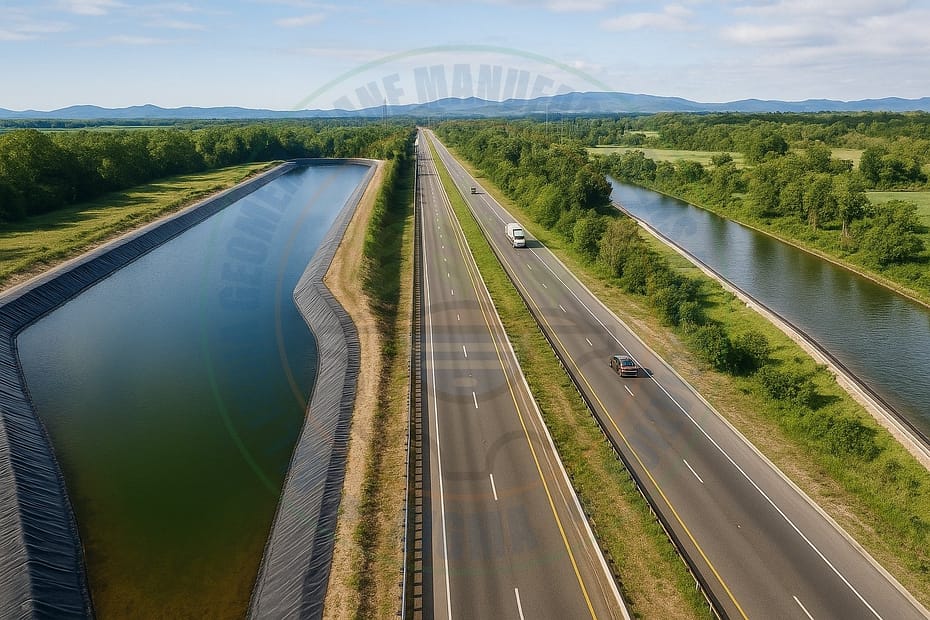
In infrastructure, geomembranes are now key components of composite lining systems, used in canals, tunnels, landfills, and road subgrades. In mining, geomembranes are used in heap leach pads, tailing ponds, and slurry lagoons to prevent chemical leakage and environmental damage. Innovations in high-strength and textured geomembranes are improving slope stability and performance in these challenging conditions.
🏭 Industry & Hazardous Waste: Compliance and Safety
Industries are increasingly required to contain and treat hazardous byproducts responsibly. Geomembranes are now a standard feature in industrial effluent ponds, chemical storage facilities, and lined tanks. With a focus on environmental compliance, multi-layered HDPE geomembranes with chemical-resistant coatings are being developed to handle aggressive leachates, acids, and hydrocarbons.
🌍 Environment & Climate Resilience: Smart Sustainability
Emerging environmental applications include geomembrane-lined wetlands, biogas digesters, leachate collection systems, and rainwater harvesting structures. Geomembranes are also being integrated into climate-adaptive infrastructure such as flood barriers, water recharge zones, and erosion control systems, playing a key role in building resilience against droughts and water pollution.
📌 Conclusion
Geomembrane technology is rapidly evolving to meet the demands of a resource-stressed and compliance-driven world. From smarter farming to safer industry, the material’s role is expanding across sectors, supported by innovations in design, durability, and sustainability. As awareness grows and standards mature, geomembranes will continue to be a cornerstone of future-ready infrastructure and environmental protection.