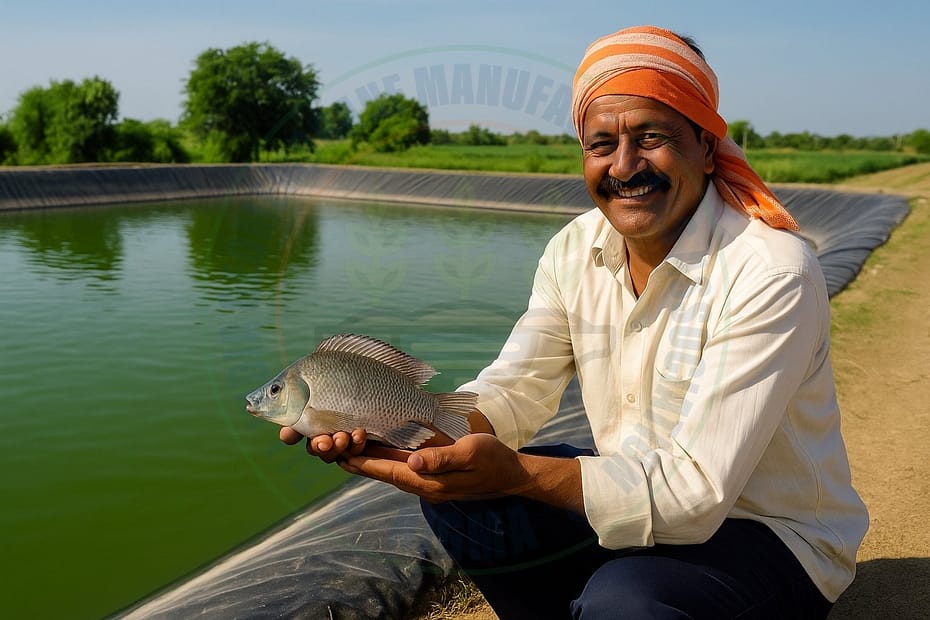
Aquaculture is one of the fastest-growing sectors in India’s rural economy. As demand for fish continues to rise, farmers are turning to modern solutions that improve yield, reduce risk, and ensure better control over water resources. One of the most effective innovations in this space is the use of geomembrane-lined ponds.
🐟 Why Traditional Ponds Fall Short
Earthen fish ponds, though common, have several limitations:
- Water seepage into the soil leads to frequent refilling and resource loss
- Uncontrolled water quality can cause disease outbreaks
- High maintenance due to algae growth, pond cracking, and erosion
- Difficulty in harvesting due to uneven and muddy bottoms
These challenges not only reduce fish survival rates but also increase input costs and uncertainty for fish farmers.
✅ How Geomembrane Liners Make a Difference
Geomembranes, typically made from high-density polyethylene (HDPE), create a durable, leak-proof barrier between pond water and the soil. When used to line aquaculture ponds, they offer several key benefits:
- Prevent seepage and water loss
- Maintain stable water levels throughout the growing cycle
- Improve hygiene by preventing contact between fish and contaminants in the soil
- Enable faster cleaning and easier harvesting
The smooth, non-stick surface also discourages weed growth and allows for better feed conversion and fish health.
📈 Impact on Fish Yield and Profitability
With better water retention and environmental control, geomembrane-lined ponds:
- Support higher stocking densities
- Reduce disease incidence and mortality
- Allow for year-round production cycles
- Lead to higher survival rates and faster growth
Farmers report significant improvements in yield and operational efficiency, especially in commercial-scale fish farms.
🛠️ Installation and Maintenance
Geomembrane pond liners are easy to install and typically last for 7–10 years with minimal maintenance. They come in pre-welded sheets or rolls and can be custom-fitted to pond dimensions. Many suppliers also offer on-site welding and installation services to ensure proper sealing and performance.
💰 Cost and Government Support
Though the upfront cost is higher than traditional pond construction, the return on investment is strong due to increased production and reduced water use. Several state governments and aquaculture development agencies offer financial assistance or subsidies for geomembrane pond construction under fisheries schemes.
🌊 Conclusion
For fish farmers looking to scale operations or reduce production risk, geomembrane-lined ponds offer a smart, sustainable solution. By improving water retention, pond hygiene, and overall fish health, they help boost yield and profitability—making aquaculture a more dependable livelihood for rural communities.